| Date | Thursday March 5th |
| Days in Japan | Day 2 |
| Location | Shinjuku (Tokyo) |
| Hotel | Sotetsu Fresa Inn Higashi Shinjuku ($56.78) |
| Steps Walked | 16,673 |
| Daily Objective | Explore Shinjuku and acclimate myself with the culture |
| Daily Tip | Sometimes it’s good to just wander without a set agenda or plan |
| English | Pronunciation | Japanese |
|---|---|---|
| Excuse Me | “su mi ma sen” | すみません |
| Sorry | “go men” | ごめん |
| I’m Sorry | “go men na sai” | ごめんなさい |
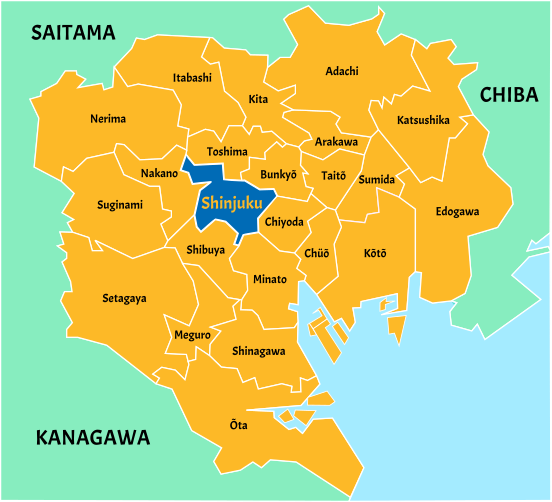
Above is a map of the 23 special wards that make up Tokyo. These wards are large enough in size that they are governed much like individual prefectures within Japan. There are three “core” wards which are Chiyoda, Chuo, and Minato given their constantly growing populations and popularity. Recently, Japan dubbed Shibuya, Shinjuku, and Bunkyo as “central” wards as each has become hot destinations for tourists and natives alike. To complicate things slightly further, in 1958, Japan recognized the cities of Shibuya, Shinjuku, and Ikebukuro (located in Toshima ward) as “sub-cores” as their respective stations act as large railway hubs. In 1982, Japan added a few more “sub-cores” for their respective station popularity although I feel Ueno/Asakusa (in Taito ward) is the only additional one worthy of mention.
If you want to go back far enough in time you’ll find that Ginza (located in the Chuo ward – Chuo meaning “center”) is really the traditional center of Tokyo. This area is located close to Tokyo Station and features the largest variety of flagship stores and top rated restaurants.
Just Some Basic Wandering
Woke up today fired up for my first official full day in Japan! Today I’ll get to explore from dawn until dusk. In reality, I rolled out of bed around 11am and showered up as I mentally prepared for the onslaught of new experiences awaiting me. While masks aren’t currently popular in the US, it’s typical in the Japanese culture to wear masks during allergy season to avoid many allergy symptoms. The Japanese also wear masks when they don’t feel well as a courteous gesture to prevent getting others sick. Unlike the US where the public areas are rather filthy and unkempt, the Japanese respect the community and keep things relatively clean, and on top of that, the workers take their job very seriously and work hard to maintain safe and clean environments regardless of their job title. With the virus news filling most TV stations across the globe, I was advised by several people to bring quality masks with me as it’d be hard to get them once in Japan. Those without masks are looked at a little repulsive even though many can’t acquire a mask since many stores are sold out. Days before coming to Japan I had hit up my buddy Octavio who works at a medical office and was able to procure a handful of medical N95 masks for the trip. I’m not a huge fan of wearing a mask but I’ll respect the thoughtfulness of wearing one as to avoid the spread of the virus.
The hotel rooms (and apartments) in Japan are very little rooms and have minimal living space. Being at a “business hotel” definitely put an emphasis on the bare minimums of what one would need to solely sleep and shower on a trip.
You can learn more about hotels, accommodations, and what to expect in my article HERE.
Alright, time to head out of the room and seek out some breakfast and coffee. I decided to keep to what I was comfortable with and headed over the convenience store next-door to the hotel. The night before Rui had taken me to the store for snacks and I was enthralled on how amazing the convenience stores are in Japan. Let alone there being vending machines on literally almost every corner (even in residential areas), the convenience stores are located on just about every block and have a decent amount of fresh and amazing food to choose from. You literally could live a somewhat healthy lifestyle just eating meals from the convenience store; although, a lot of the good stuff goes fast and isn’t restocked immediately. They also have some shelves (much like the refrigerated section) that have “hot” food and drinks. You can pick up a warm bottled coffee or tea on a cold winter day. If you want some noodles or something that’s packaged as a meal, they’ll kindly heat it in the microwave for you and many stores even have an area to eat at (although they sometimes charge slightly more tax if you’re dining in). The main convenience stores are Family Mart, Lawsons, and 7-Eleven. It’s important to remember that ALL 7-Elevens have ATMs located in them where you can pull out cash using an international bank card.
You can learn more about convenience stores and what to expect in my article about them here!
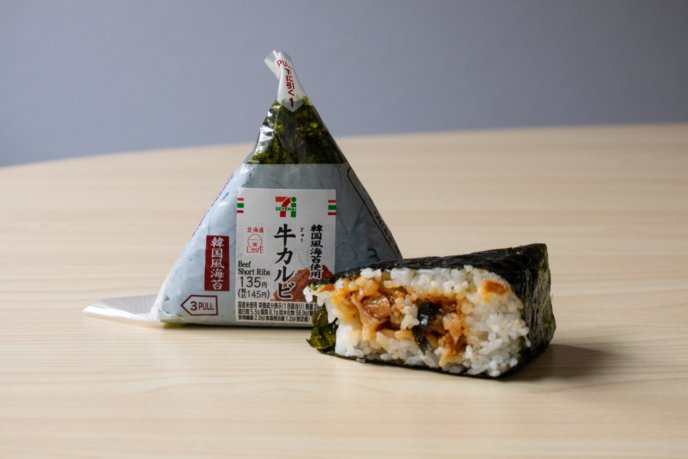
I picked up some Onigiri and a coffee from the store as a light brunch. I’ve been wanting to try Onigiri since originally planning the trip. Onigiri is basically just a rice cake with a little filling such as salmon or tuna in the middle. Super basic overall but it’s in a TON of anime that I watch and it was one of the top things on my list to try as I’m already a rice fanatic. Rui actually shared with me a video detailing the correct ways to open the Onigiri which let me feel a little more like I’d acquired some insider secrets.
Exploring The Local Cuisine
Okay okay, back to actually leaving the hotel and exploring Shinjuku… Today the plan was to wing my schedule as I’d arrived in Japan one day earlier than my original agenda had accounted for. I hadn’t activated my SIM Card yet as I couldn’t quite figure out the instructions which just meant I needed Wi-Fi to use google maps and most of my iPhone features. Nonetheless, I strolled down the busy street in which my hotel was located on and headed in the direction of Shinjuku Station which is a hot spot for shopping and Izakayas.
As stated in an earlier post, an Izakaya is basically restaurants with a large emphasis on drinking. They’re different from a “restaurant” and a “bar” as they meet in the middle of the two.
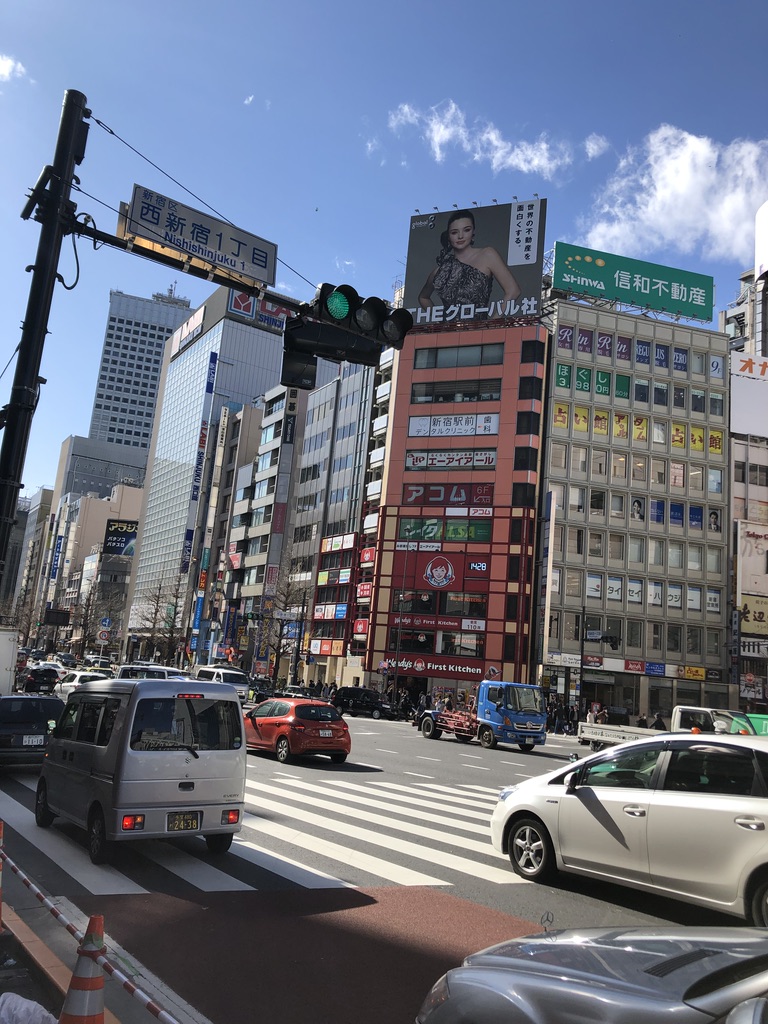
I quickly realized that Shinjuku, as well as pretty much every major city in Japan, provides free internet in the more populated areas. I was able to log onto the Wi-Fi, and while spotty as hell, it let me access my maps and do some searches on places that could be worth checking out. Whenever in a new city, I like to wander a bit to familiarize myself with some of the landmarks and streets before actually following any agenda. On my way to the station, and while being completely starstruck from the city’s sights and sounds, I stumbled upon the famous Kabukicho gate and snapped a quick photo. I’m not a huge fan of taking photos (slightly unfortunate for those reading this blog for the photos) and always feel kind of embarrassed to be taking them. Because of this, many photos throughout this blog are “action” shots that I snapped while in motion and just passing by. I was only familiar with this gate thanks to a recent anime I’d seen about a Japanese take on Sherlock Holmes which is staged in Shinjuku and shows the large sign regularly.
 | 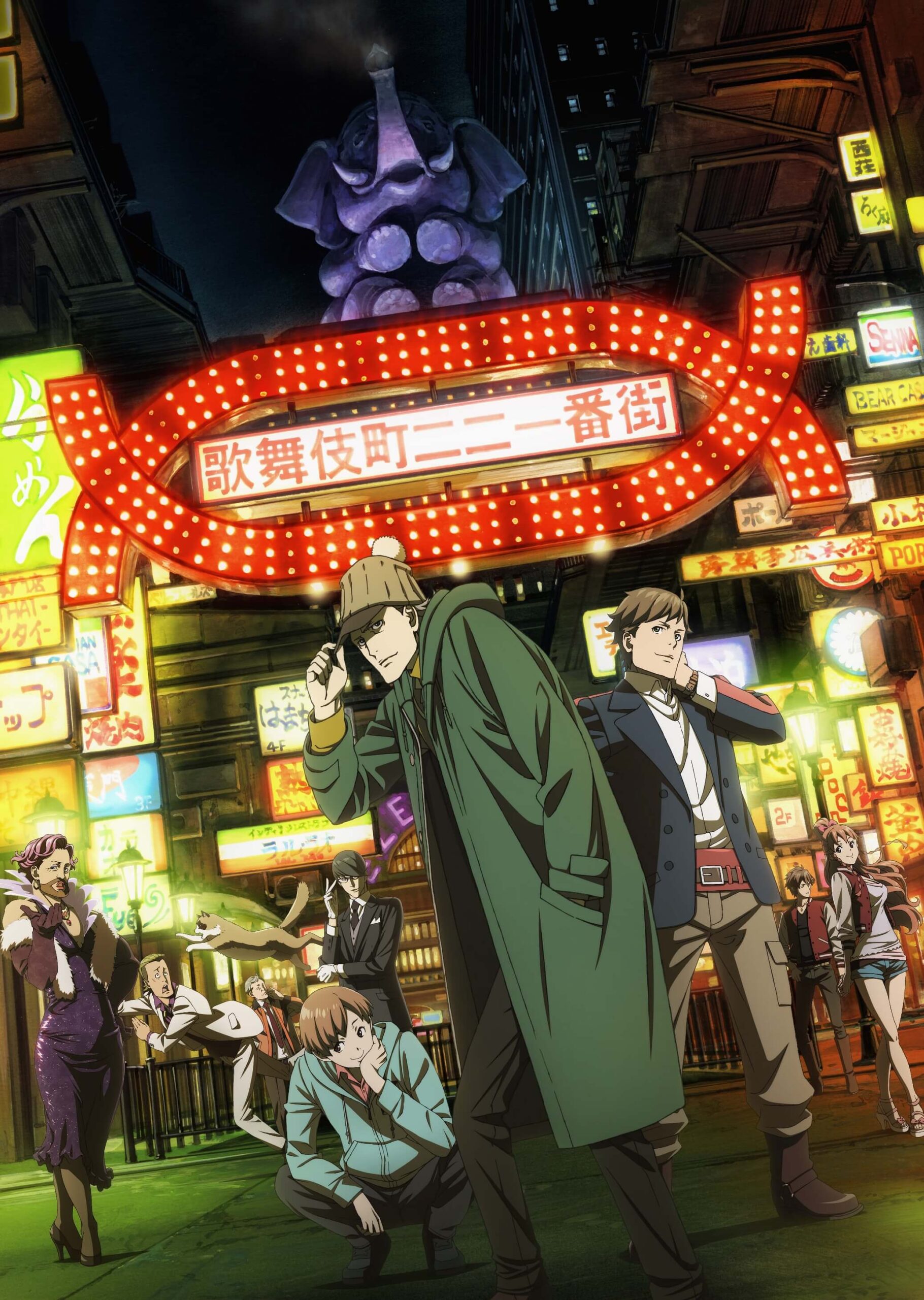 |
Ultimately signaling that when the busy fancy shops around Shinjuku station close, the neon lights from the red-light district light up the streets.
Picture on the left is the one I took vs the anime cover photo on the right
I continued my journey and tried to take in as much as I could while wandering aimlessly. Whereas in the US, the first and second floors of a building may be a store or restaurant, but in Japan there’s tons of restaurants, bars, and other cool places located on the 4th, 5th, 6th, and even sometimes in the basement of just about every other building. Without being able to read Japanese clearly and without knowing the culture well enough, it was difficult to know which of these places could be a hidden gem waiting to be discovered. This drove me a little crazy given that one of my hobbies in San Francisco is to explore and learn about all the coolest spots in order to lead tours for locals showcasing all the amazing gems you may not commonly stumbleupon. At the same time, this hobby has honed my skills for finding pretty cool spots that are “off the grid” and I had big plans to put this talent to use throughout this trip!
The inability to use my phone without Wi-Fi was beginning to take its toll as I continued to wander the never-ending streets of Shinjuku battling the unreliable city’s free Wi-Fi. I made my way past the station and simply followed my gut in picking a random direction to move in next. After walking for quite some time, I came to what seemed to be the business downtown area of Shinjuku which featured tons of large business buildings and many bustling business men & women. Here I noticed the large tower-like building that resembled the Salesforce Tower in San Francisco. I snapped a quick and sly photo as to not attract much attention to myself and proceeded to explore the area.

I’d heard a lot about the underground food courts from friends and was determined to find one for my next meal. While continuing to pretend I wasn’t lost, I soon spotted a sign with several different logos on it and a staircase leading downwards. As I made my way towards the stairs, I stopped at a small intersection to wait for the light to change. A random guy in a red jacket came over and started to say something in Japanese, I assumed he was trying to sell me or ask me something much like people often do at intersections in San Francisco. He was speaking Japanese so I kindly waved him off and continued to look forward at the intersection light hoping it’d change in the immediate future to allow me to avoid this awkward confrontation. Instantly another person in a red jacket came over and spoke just enough broken English for me to figure out they were asking me to step aside and pointing towards some now-visible movie cameras and lighting. Apparently, they were shooting a commercial or film and didn’t want anyone in a mask to cross the street during the shot (makes sense now why lots of Japanese film shots have no one in masks whereas in reality many wear masks around!). Once the shot was over and it was clear for me to cross, I made my way down the stairs and towards the food court. It wasn’t quite what I was expecting and I began to remember that I sometimes have a bad case of anxiety when deciding little things such as where to eat or what to do next. The anxiety began to set in like a fog over the Sonoma County vineyards and I became stiff and unable to select a spot to visit for lunch. The anxiety mixed well with the nerves currently creeping in over my lack of ability to speak Japanese which could create issues that would attract attention to myself (as if being a 6′ American walking around sightseeing during a world-wide pandemic isn’t awkward enough). I continued to pass by all the shops and eventually opted to take a seat outside in a nearby courtyard in order to take a deep breath and hoped to make use the nearby free Wi-Fi. After attempting to sign onto several Wi-Fi connections in which are “open” but you need a pass code or login to access, I finally got connected onto one that merely required my email confirmation. Since I was hungry and now realizing that I had wandered quite some distance from my original route, I decided to look up some food places closer to the action of Shinjuku Station.

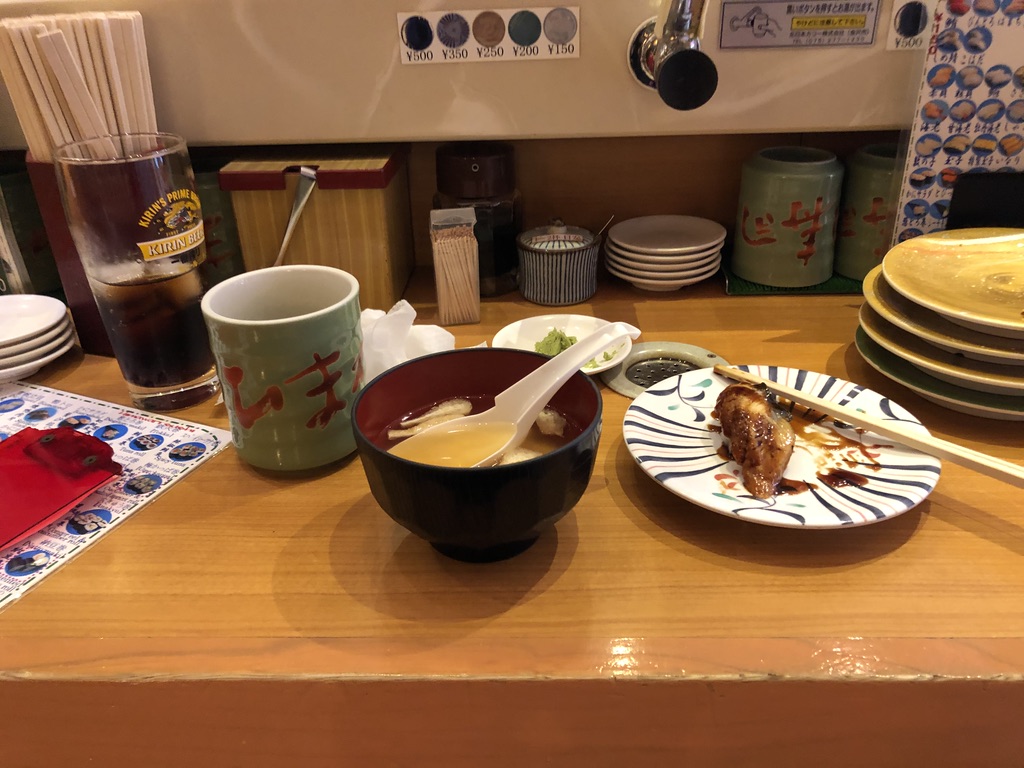
This would officially be my first Japanese meal while in Japan. I was able to use Yelp and Google Maps to locate a highly-rated Ramen shop and a highly-rated Sushi shop, both somewhat close to the area I wanted to return to. I ended up deciding on the sushi shop and after passing by about 3 times in search of it, I walked into the conveyor-belt run sushi shop. Basically, how it works is that the sushi is put on plates slowly rotating around to all the seats and you just grab whichever sushi you want and stack the plates. Each plate ranges from about ~$1.50-$6 depending on the type and amount of sushi on it. I was guided to a seat and after an awkward exchange in Japanese (I assume asking if I wanted to drink something) I began to analyze my current situation. There were only a few customers in the shop and I could feel everyone’s gaze on me as I shuffled around trying to figure out how to fill my teacup with hot water… After a little accident I finally found the right button and combo to access the hot water and quickly discovered the matcha powder you need to use to create your own tea. I felt pretty accomplished as all I had to do now was grab any plate I wanted and stack it to my side. The sushi was soooooo good that I just couldn’t stop stacking more and more plates, during which time several customers came and went during their brief lunch breaks. It may have been a mixture of the nerves and uncertainty of what I’d do next that kept me eating, but like all good things, the time finally came for me to finish and make my way to the checkout.
Rui had given me a little crash course on the currency as they use a lot more coins in Japan than we do in the US and they also love cash. Many places won’t even take credit card.
She’d also hooked me up with a little coin purse so that I didn’t have to awkwardly feel around my pocket for the correct change. It’s actually common for people to walk around with 30,000 – 40,000 (~$350) in yen. Pretty much every spot has an old school accountant’s calculator so they can show you the amount due without having to worry about communication struggles. You also never hand anyone cash directly; every business has a little tray/dish thing that you place the money into at the counter and once you’re done putting in the correct amount, they’ll seek change to replace the money with or present you with your receipt (both on the tray). Lastly, they like to try their best to use exact payment so the cashier doesn’t mind if you spend an extra few seconds looking for a Japanese nickel in order to meet the exact price.
Taking In The Local Scenery
After finishing my meal, I once again made use of the city’s free Wi-Fi and mapped out my walk to the closest (and largest) park in Shinjuku – Shinjuku’s Gyoen National Garden.
I hadn’t connected the dots yet but this just so happened to be on my list of places to see! While strolling up to the park the first thing I noticed was the gate and “ticketing” area. It was 500 yen to enter which is a little under $5. I happily paid the fee, grabbed an English map, and made my way into the park. The first thing I noticed was the resemblance this park had to Golden Gate Park in San Francisco. It wasn’t quite as vast but had a ton of different areas and things to see. I took a moment to review the map and come up with a plan of attack. The park was obviously much less busy than it would be without the virus but nonetheless there were still a good number of locals and tourists making the rounds. My first observation as I cut to the path on the right was that there are “rest areas” located all over the park. These rest areas feature several vending machines, free Wi-Fi (woot woot), clean bathrooms, and sorted trash cans. It’s important to note where trash is located around town as trash cans are very scarce overall. I was able to sit and relax while chipping away at some of my stress and woe of not being able to connect to the world for a brief time. I proceeded to move around the park in a strategic fashion as to not miss anything illustrated on the map.


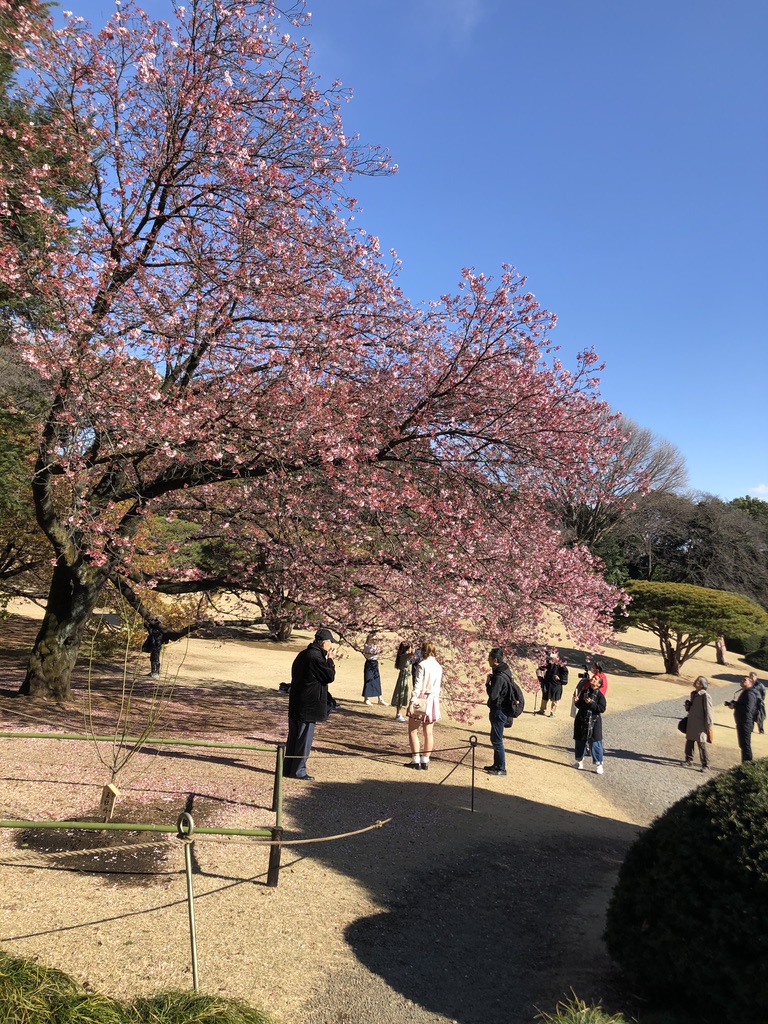
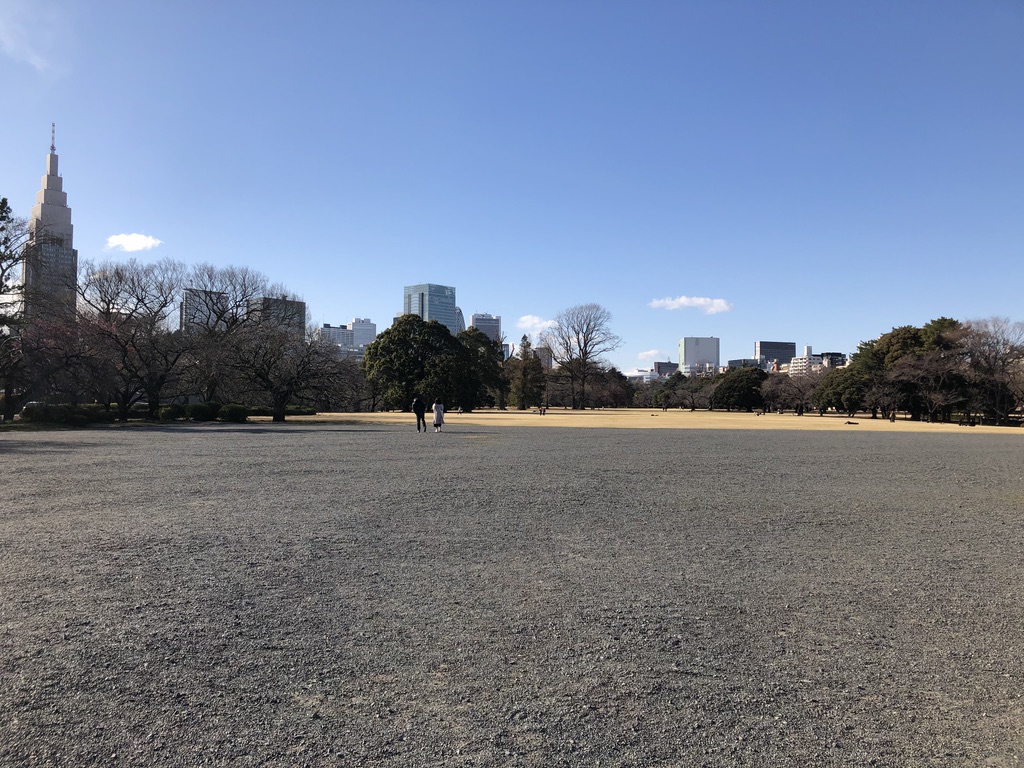
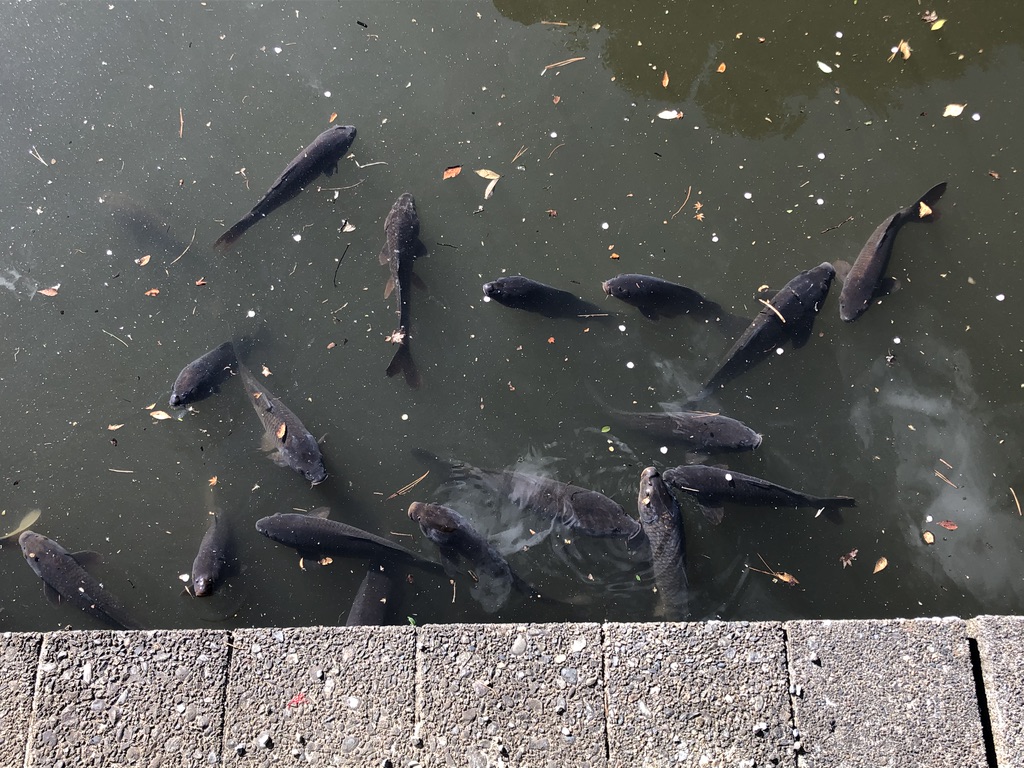
I eventually made it around a little pond in which hosted several small tea houses and was even asked by a friendly German couple to snap of photo of them from inside one of the historic buildings. It was at this time I was able to spot my first Sakura (cherry blossom) tree in the park. There was one solo tree that had bloomed which was currently surrounded by a large crowd trying to catch the perfect Instagram photo. I basked in the glory of having seen a cherry blossom tree as this was the point of conversation this time of year in Japan. I found my way through the rest of the park with relative haste and eventually made my way back to the gate I had entered from.
Many bathrooms; public, restaurant, and store, don’t have napkins or towels in them. Everyone in Japan carries around these little hand towels that they take with them to the bathroom to dry their hands. These towels are called “tenugui” and it’s pretty obvious to see who had one and who didn’t upon exiting the bathroom.
I was still full off the example of gluttony I showcased at the sushi shop but felt that I had earned myself a beer! Feeling accomplished with my journey and probably a little overly exhausted given my constant anxiety from not being able to use my phone, I headed for the hotel. Along the way I made a quick pit stop at the local convenience store as I eased back into my comfort zone and worked my way up to my room. After a few beers and another Onigiri, I was ready to call it an early night and begin my officially “scheduled program” the following morning.