| Date | Friday March 6th |
| Days in Japan | Day 3 |
| Location | Shibuya (Tokyo) |
| Hotel | Sotetsu Fresa Inn Higashi Shinjuku ($56.78) |
| Steps Walked | 8.848 |
| Daily Objective | Explore the wonders of the famed Shibuya |
| Daily Tip | Don’t always trust the foreign reviews about places. |
| English | Pronunciation | Japanese |
|---|---|---|
| Recommend | “o su su meh” | おすすめ? |
| It Is | “des” | です |
| Is It? | “des ka?” | ですか? |
Map of Travels
[image of map]
Just Another Friday in Japan
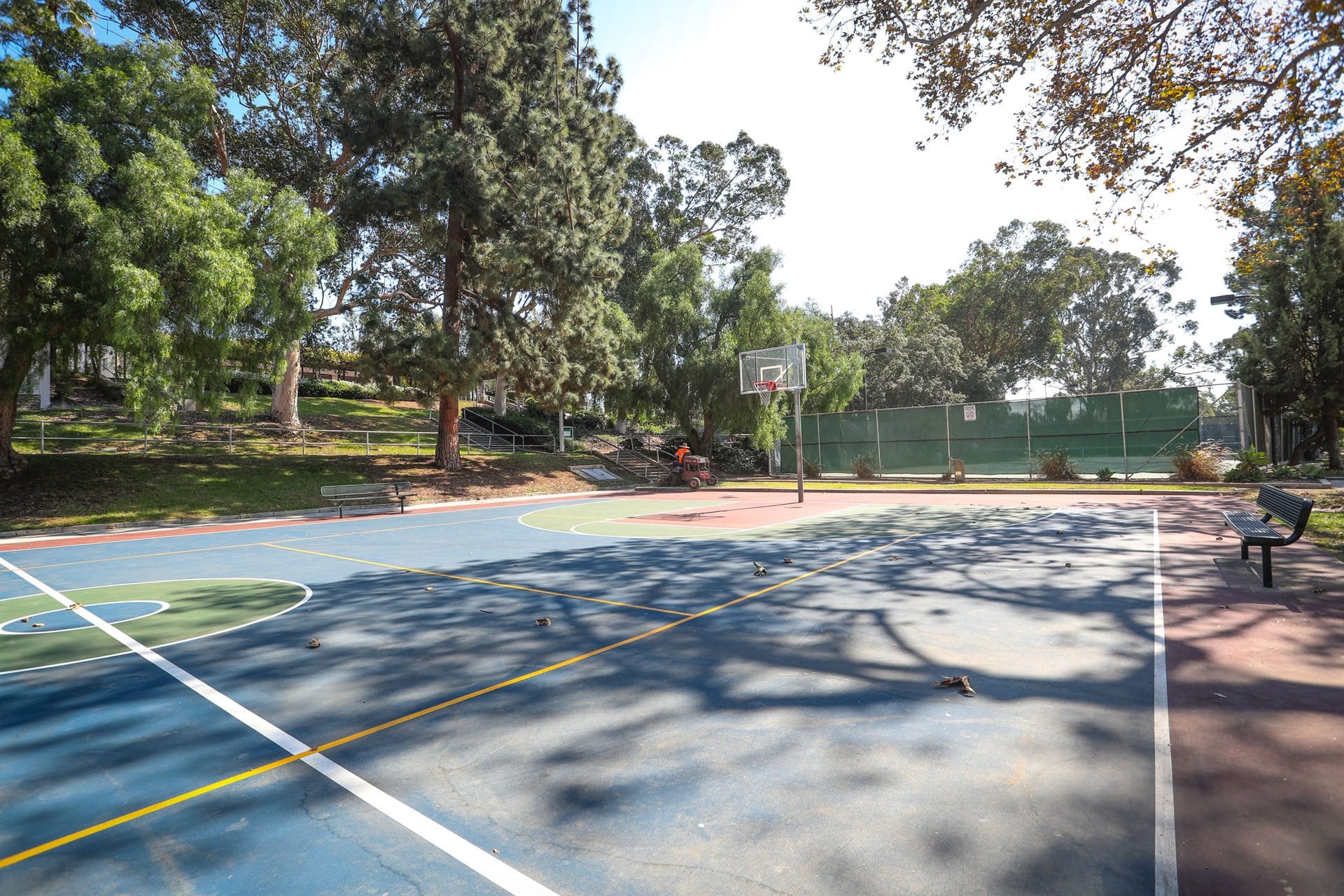
Oh boy oh boy oh boy, it’s finally Friday! Time to turn-up, get wild, and experience some happy hours featuring the renowned Japanese drinking culture. This morning I wasted no time mapping out an exploration to one of the most popular and happening neighborhoods in Tokyo, Shibuya. Shibuya is known most for it’s “Shibuya Scramble Crossing”, “Shibuya Scramble Square”, abundance of love hotels, Izakayas, and clubs. The area attracts a younger crowd given all the clubs and the drinking culture, although with the help of a few drinks I can usually play the part.

The drinking age in Japan is 20 and I have to say I was ID’d ONCE throughout my entire trip (not that I look that young) but all you have to do is literally click a button on a kiosk at the convenience stores confirming that you’re “20 or over” in order to purchase alcohol.
I did have to spend a little longer than I’d hoped at the hotel just recording and organizing my expenses thus far. I’m making an attempt to keep track of all my expenses throughout the trip which isn’t too difficult currently but I definitely eventually gave up on that later in the trip when cash became my primary source of payment. I also spent a decent amount of time planning my evening and deciding which bars I wanted to visit first. Another acquaintance of mine had recommended “Goodbeer faucets” which had coincidentally popped up through my own research… good enough reason to make it my starting point! When I travel or go out I like to plan things very thoroughly but mostly as a “Plan B”; overall, I actually enjoy wandering and following my gut on where to go. There is a fine line on how far that’ll take me before my anxiety sets in and I begin to feel all sorts of stress over the inability to settle somewhere. I’m also not a huge fan of “tourist hot-spots” or places that are heavily visited by foreigners. Rui had agreed to come out to Shibuya this evening after work to give me my first real Izakaya experience so I only had to outline a small portion of the evening.

The station I departed from to get to Shibuya was a smaller station than the Shinjuku Station and located just down the street from my hotel. I got to the station and quickly realized that the “map” of stops was completely in Japanese Kanji. Kanji is the traditional chinese character writing that Japan took up a little while back and might as well been hieroglyphics for all I know. Since I had yet to activate my SIM card successfully, this meant I was now unable to use my phone for maps, communication, and was unable to read what station I needed to get to… My anxiety decided to team up with my nerves in order to keep me from attempting any communication with the masses of local Japanese that were effectively utilizing the kiosks and heading off past the ticket gates. Luckily, before leaving the hotel, and my sanctuary of comfort, I had taken some screen shots of the directions (although in English) and at the bottom it showed the overall “cost” of the trip to Shibuya. I assumed that’d equate to the one-way ticket I needed to get to Shibuya so I simply put my change into the machine, got my ticket, and successfully proceeded through the gate at least knowing which platform and train line I needed thanks once again to my screenshots.

Japan has 3 different basic writing styles or alphabets.
| Hiragana | Katakana | Kanji |
|---|---|---|
| Can be used to spell out and write most Japanese words or sentences. The modern hiragana consists of 46 base characters: 5 singular vowels 40 consonant–vowel unions 1 singular consonant | Used when spelling a foreign word such as banana. While the Katakana are different characters from the Hiragana, they have the same rules, sounds, and number of characters in their alphabet. | An old Chinese character system in which the Japanese have adopted. Consists of over 7000 characters and each have individual meaning and sound different. Although they sound different from Chinese to Japanese, either culture could use these characters to communicate with each other in writing. You literally can’t sound these out, you need to memorize the strokes of each character to remember the meaning and sound associated with each. Students spend approximately 7 years learning the basic Kanji. |
| – Example – えきですか? Is it a station? You’d typically not use Hiragana for station and would instead use the use the Kanji which you can see in the Kanji example. | – Example Words – バナナ – Banana アメリカ – America ケチャップ – Ketchup ヒューマン – Human | – Example – 駅ですか? Is it a station? You can see how much more complex the Kanji can be to describe even simple words like station. |
Learning the Hiragana or Katakana really isn’t too difficult but you need to learn thousands of Kanji to read just about anything in Japan.
The train station kiosks are relatively easy to use once the get the hang of them. Depending on the size of the station there may be several different kiosk areas. Japan has a ridiculous amount of different “train lines” which are conveniently sorted by color (the train itself even usually has that color painted on it). Each line is owned and operated differently so it’s important to make sure you’re at the correct kiosk when purchasing your ticket. There are two ways to get a ticket; you can either look at the large map above the kiosks, notice the amount needed, and simply click that on the screen (i.e. 260 yen button) in order to print a ticket for that amount, or if you’re lucky sometimes you can change the language to “English” (not all kiosks have this option) and find the destination station and click on that. As an emergency fail safe, at the larger JR stations, there’s a ticket booth where you can purchase your necessary ticket from an actual person and even at smaller stations there’s usually a worker onsite who can assist with getting the correct ticket. If you do happen to miscalculate your overall trip, the “fare adjustment” kiosk at your destination is relatively straightforward and easy to use (unlike ones at BART in San Francisco). Some kiosks take credit while some only take cash or change. You don’t have to put the exact amount in as it’ll provide you change (and even give back cash as change!). At one point later in the evening Rui literally took my entire change bag and just dumped it all into the machine to speed things along.
The main railways in Japan are the JR Railways which are pretty commonly found throughout Japan and ultimately connect many smaller towns – although they’re different from the “local” trains you can find to travel more locally. There is a JR Railway Pass that you can purchase for 7, 14, or 21 days. The Pass must be purchased in advance (before arriving in Japan) and thus gives you free access to ALL the JR Railways during the selected period of time. It’s a pretty awesome package and a great deal if you’re planning on traveling a lot in a short amount of time. I didn’t personally purchase the pass as most of my stops were for a few days at a time and after doing some research I found that even the 21 day pass wouldn’t really save me much money.
Alright, so now I’m on the local train to Shibuya. I even confirmed I’m on the right train by checking out the electronic map that appears on each train above the doors (if you’re lucky you’re on a train that shows some names in English). The train wasn’t packed like what you hear about in stories but there was enough people that I was unable to procure myself a seat. I had my “handy dandy” noise cancelling headphones on (never leave home without them) that allowed me to escape my present surroundings and keep my anxiety in check. I soon arrived in Shibuya and made my way to the closest exit which evidently dropped me right at the Shibuya Crossing!
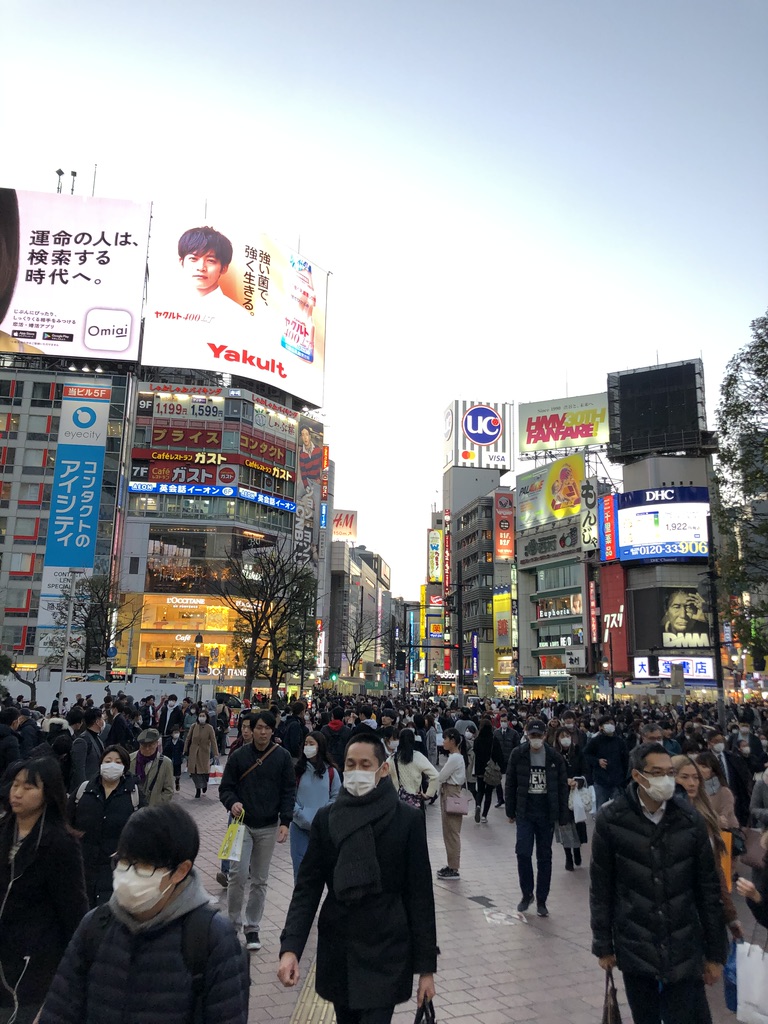
I was able to take a few minutes to appreciate the craziness of the intersection even though there was probably much less commotion than when tourism is in full effect. I used the screenshot of my maps to navigate in which direction I needed to go to find this highly proclaimed Goodbeer Faucets bar. I assumed it’d be pretty busy given the online reviews and the fact that most bars and Izakaya in the area were beginning to fill up as the post-work crowd was now seeking to celebrate the end of their week and kickoff their weekend. After a bit of wandering and backtracking, I finally noticed a small sign labeled “Goodbeer Faucets”. The bar was located on the 2nd floor which I had failed to notice from my screenshots. Regardless, I made my way upstairs and gave my hands a good ole sanitizer rub with the free sanitizer positioned by the door. Pretty much every doorway in Japan greeted you with a sanitizer spray allowing you to wash your hands before entering and some restaurants were reluctant to manually sprayed your hands to ensure cleanliness. I was surprised that the bar was actually quite empty but was also relieved when greeted by the English speaking staff. I sat at the bar and began to review their beer list. They basically had a handful of American beers, mostly from the west coast near where I’m from, and a decent Japanese Whisky selection. I was actually a little underwhelmed by the selection all in all but then again I am a bit jaded by living in an area with tons of amazing micro-craft breweries. I ordered myself a locally brewed red ale, which is one of my more favorite types of beers, and began clicking around on my phone in an attempt to connect to some Wi-Fi. I needed to connect with Rui who would be showing up within the next hour or so to take me to my first official Izakaya!
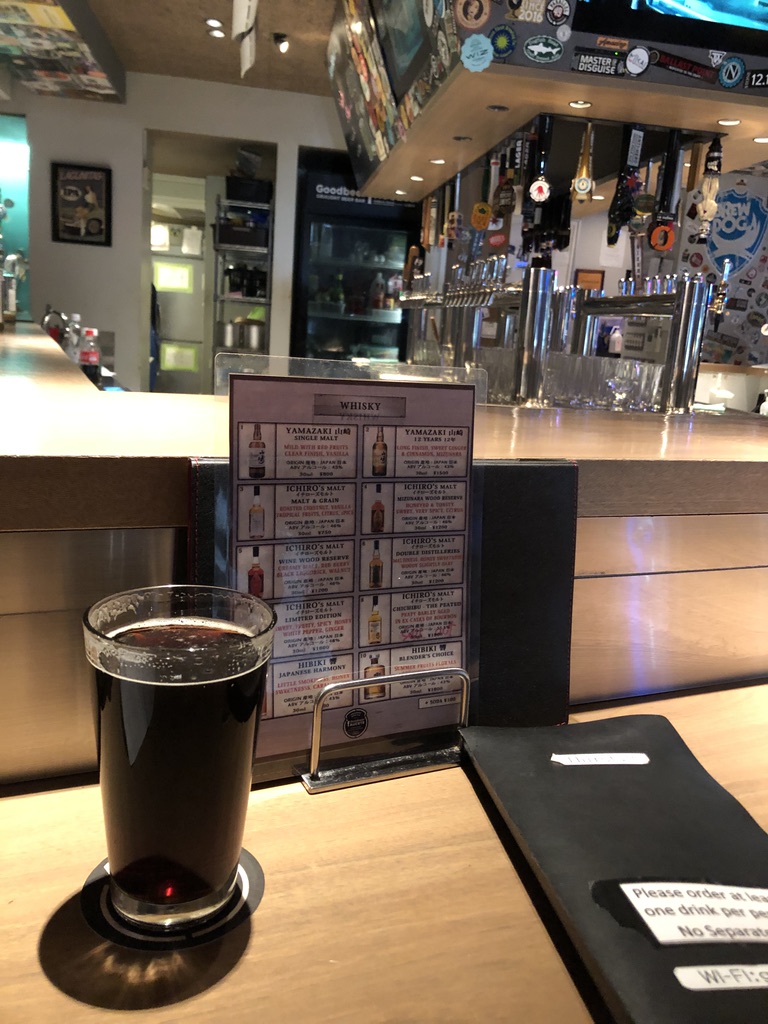
Many restaurants and Izakaya are located on different floors so it’s important to always note which floor your desired destination is on.
While fiddling with my phone and about halfway through my first beer, two older American gentlemen came in and sat just a few seats away. They seemed to know the place as one was showing the other gentlemen around Shibuya. Turns out they were pilots for United or some larger airline and had a layover in Japan. Even with my headphones on I could pickup on some of their conversation and gave myself a slight mental facepalm when one of the men commented on the bar incorrectly spelling “Whisky”. For those who haven’t attended my bartending class yet…
Whisky is spelled without the (e) if it’s a Scotch or a Japanese Whisky (which is modeled after Scotch). Irish and American Whiskeys include the (e) in their spelling and are produced slightly differently.
Anyhow, their conversation wasn’t particularly captivating but one of them spotted me looking “American” I suppose and began inquiring about where I was from. We continued to discuss the variety of beers on the menu and all the awesome beers that ultimately come from the west coast. I finished my initial beer and hadn’t heard from Rui yet so I opted to grab another pint. As I made my next order one of my new drinking buddies actually offered to sponsor my drink which was a nice little surprise and reward for maintaining what was a pretty shaky conversation. We continued to chat for a while longer and eventually they took their leave excited to explore more places on their own. Around the same time I finally got a reply from Rui indicating that she was nearby and agreed to meet at the bar so that we could venture to the Izakaya together. Without being able to use my phone without Wi-Fi assistance I was a little scared of leaving her waiting somewhere while I aimlessly wandered the streets.
Don’t always believe the review on English apps – Americans and others rate everything super high mostly just based off their hype of being in Japan…
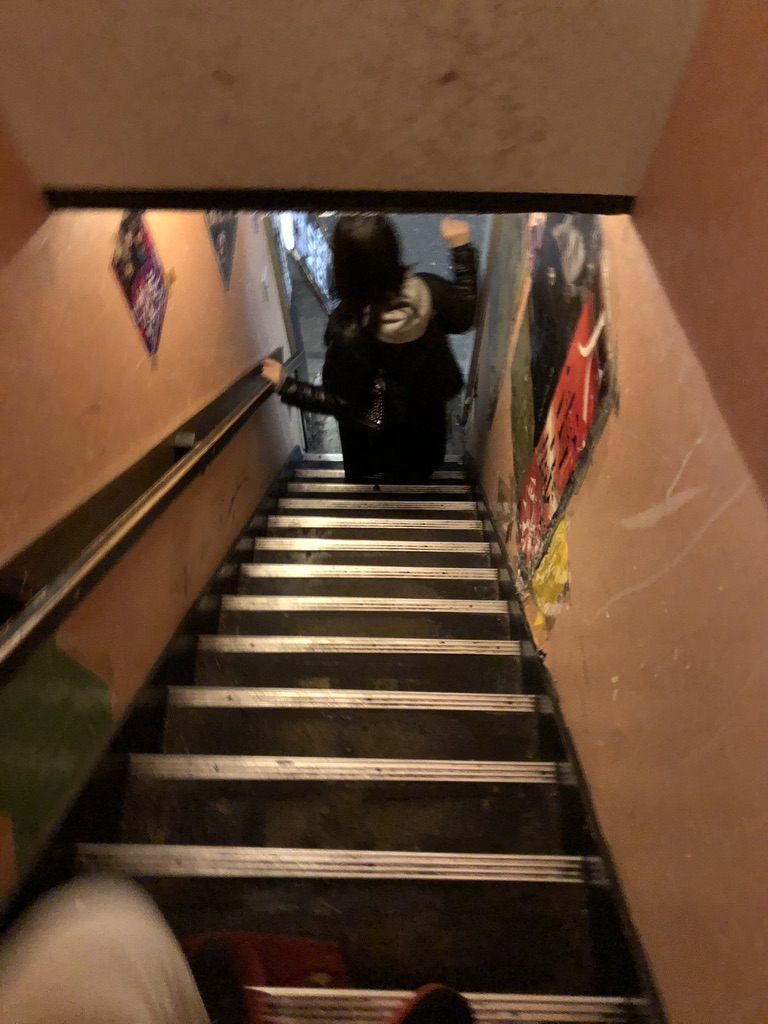
Not going to lie, a LOT of the Japanese people are pretty similar looking with their masks on and it makes it difficult to locate the person you’re looking for in a large crowd. To avoid these challenges it was easier for me to wait for Rui to recognize me as she usually ran up shouting some greetings once having spotted me. We finally connected and began our evening journey to the Izakaya which was located pretty close to where I was held up and just down a small alleyway. Holding true to my theory that all the best places are located on awkward floors of hard-to-find buildings, there was minimal signage to locate this Izakaya which was located on the B2 (basement) floor of a small building. We headed down the eerie stairwell and found ourselves entering an almost completely packed Izakaya roaring with conversation and laughter. We had to remove our shoes at the door which is pretty common at most of the better tradition spots in Japan. We made our way around the bar area (kinda like a food counter near the chefs – not a drink bar) and secured 2 seats near the corner as the server took our coats to hang them up behind us.
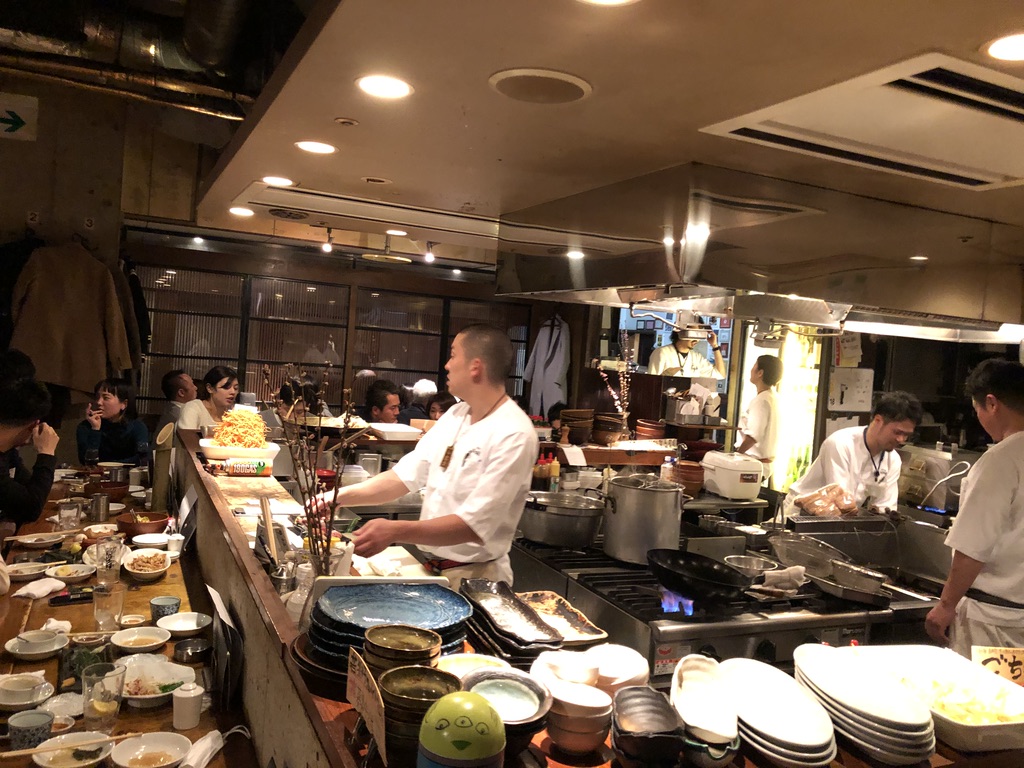
Most bars, restaurants or Izakaya have hangers located near the seats or the door for you to hang your jacket or belongings – since Japan is so safe you don’t need to worry about theft. They also usually provide a basket on the floor for you to place your bag in.
I couldn’t shake the large smile on my face as I was one of few foreigners in the entire place and judging from the continuous stares, was probably one of the few who’d ever discovered this local gem. The menu was handwritten in Japanese characters and they didn’t even have an English version which is a pretty good sign of the place being amazing. Rui ordered us up some sake, beers (I love to drink the two in tandem), and a smorgasbord of exotic Japanese cuisine. I felt I’d finally stepped into another world and was a little ashamed that I’d just come from a “tourist trap” bar located just down the street. We proceeded to eat some amazing Sashimi and I got to try some other delicious dishes as we crushed quite a few drinks and eventually prepared ourselves to take our leave.
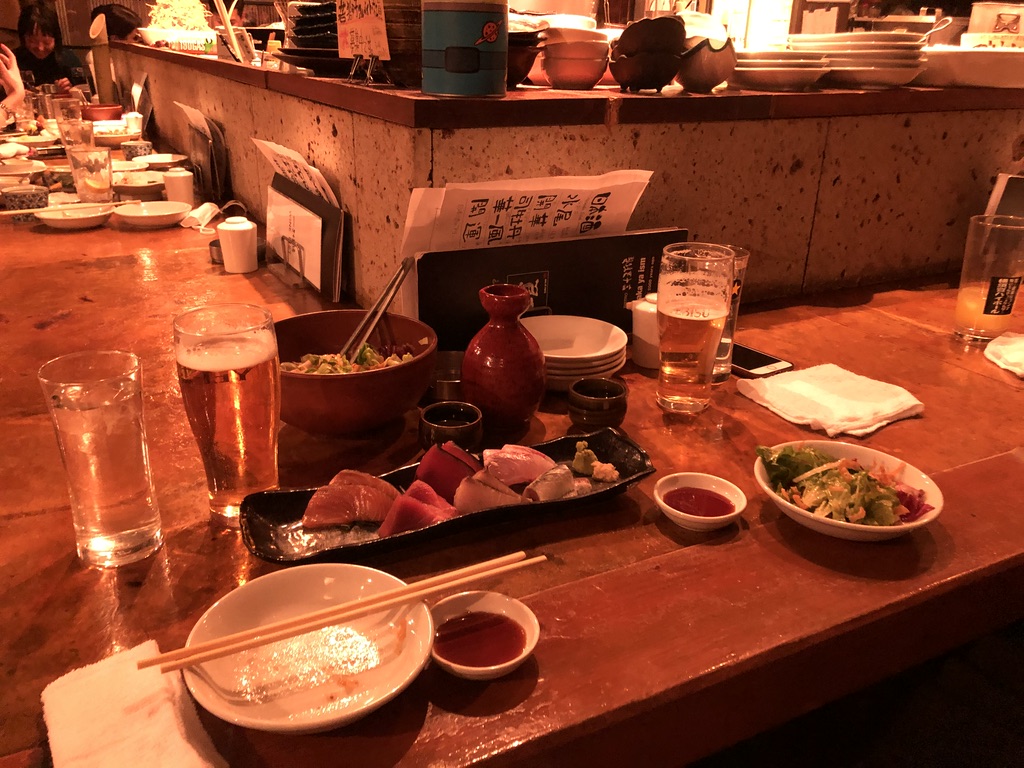
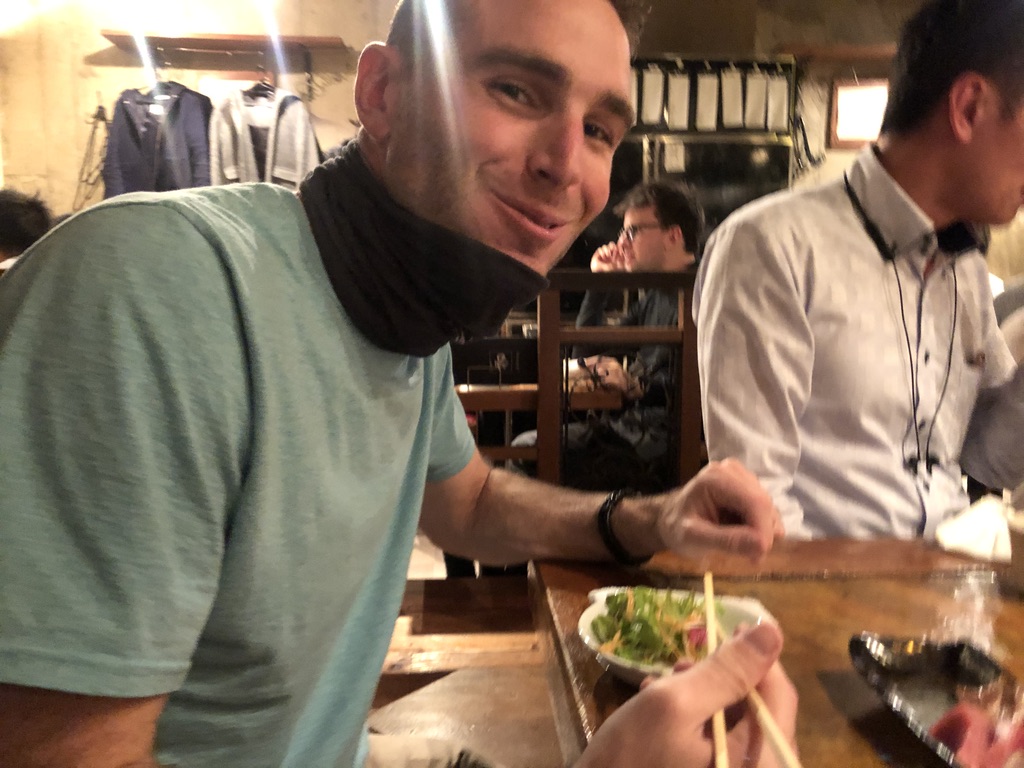

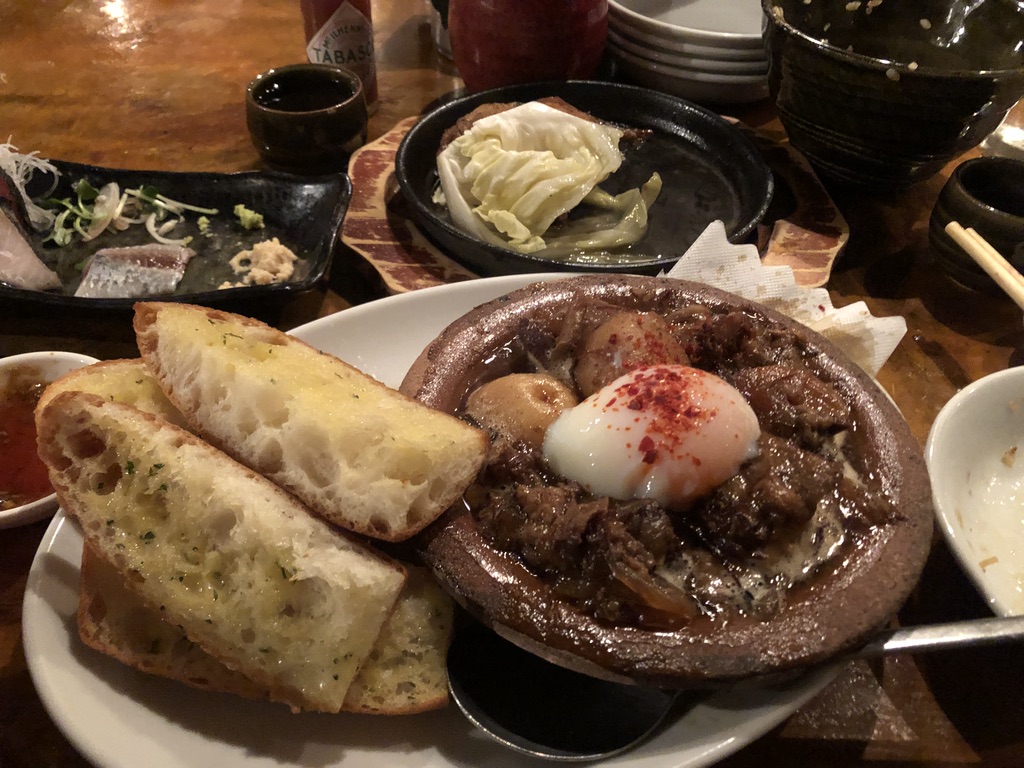

We both agreed to continue our exploration and decided on sampling some more bars in the Shibuya area. After walking past several places and trying to pick a spot primarily based on our gut, we came up on a bar called MON which looked like a pretty fancy spot. We headed in and once again scored ourselves seats at the bar as we began to examine the very lengthy drink menu. Finally, a real bar with an extensive and amazing cocktail list. The bartenders really looked to know what they were doing and the cocktail list was vast which was quite impressive as I know first-hand how hard memorizing a ton of drink recipes can be. I’d heard a lot about how the bartenders in Japan took their job very seriously and treated bartending as an art. After examining the menu for quite some time and while in partial shock by the vast spirit selection, I decided to go with one of my mom’s favorite cocktails – The Grasshopper. This cocktail is a minty and sweeter martini of sorts but tastes like x-mas morning. We both placed our order and it appeared that the bartender was beginning to feel a little uneasy by my constant staring in my attempt to examine his technique and movements around the bar. Ooooooiiii the drink finally came and was better than I remembered!
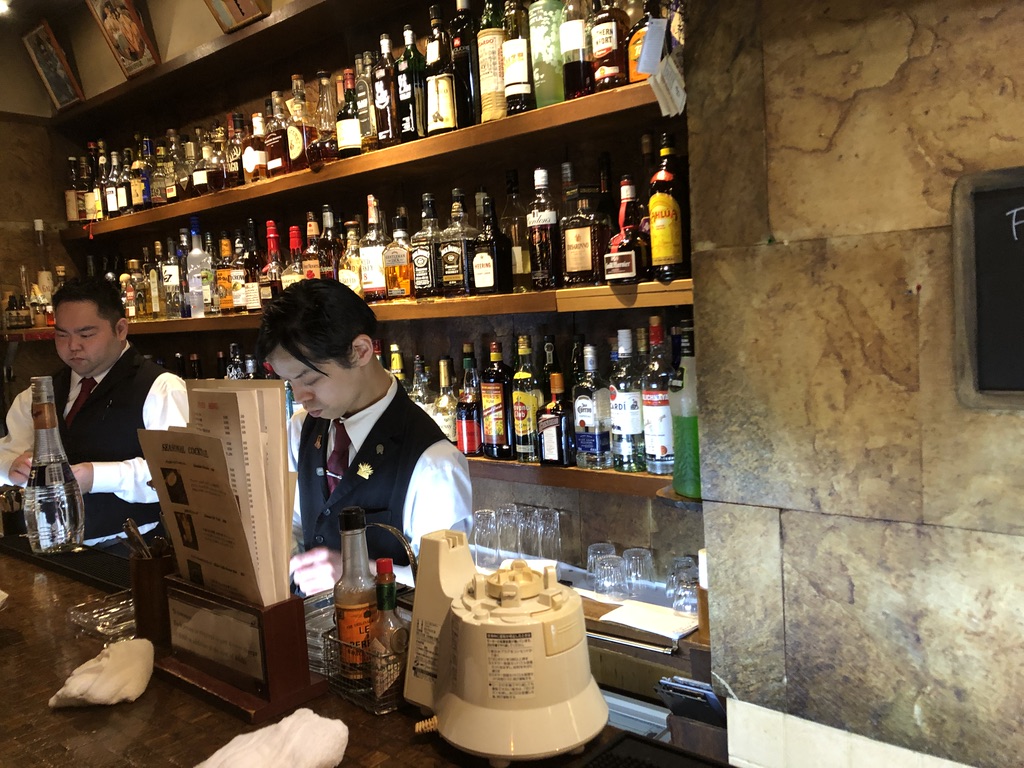
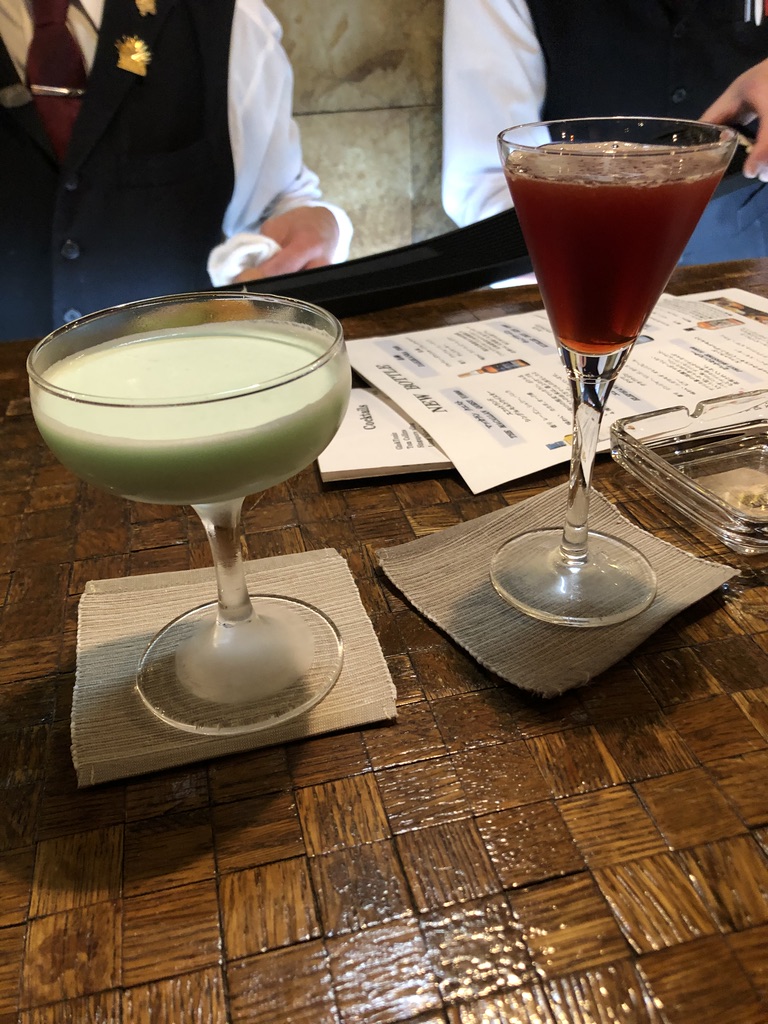
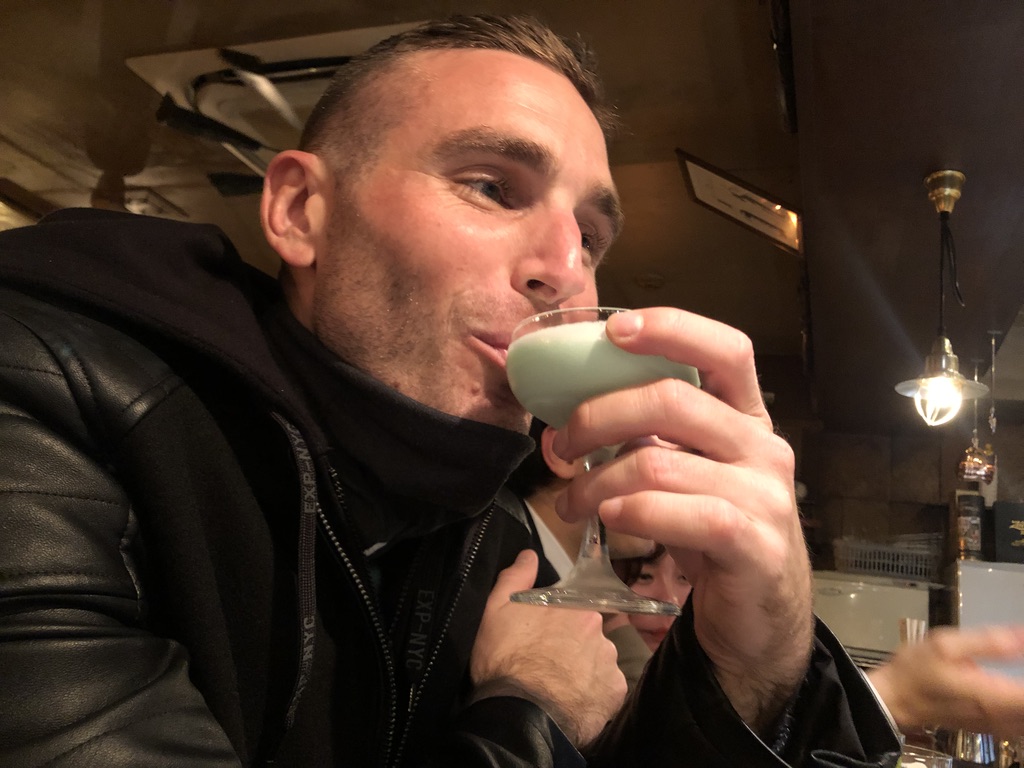
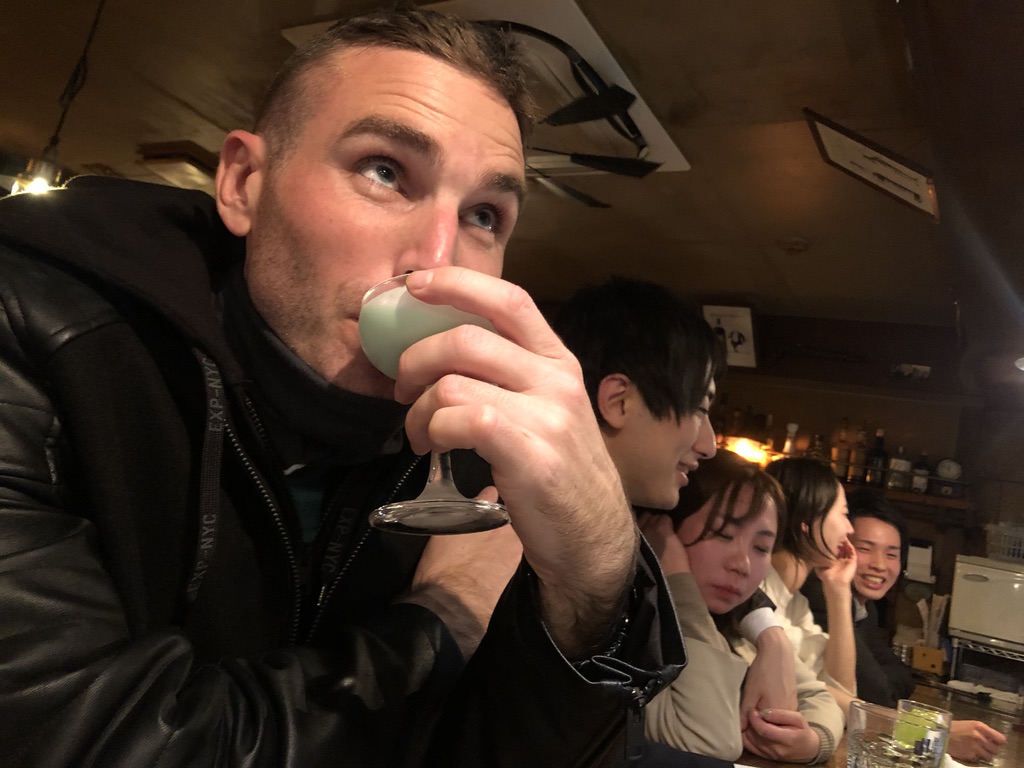
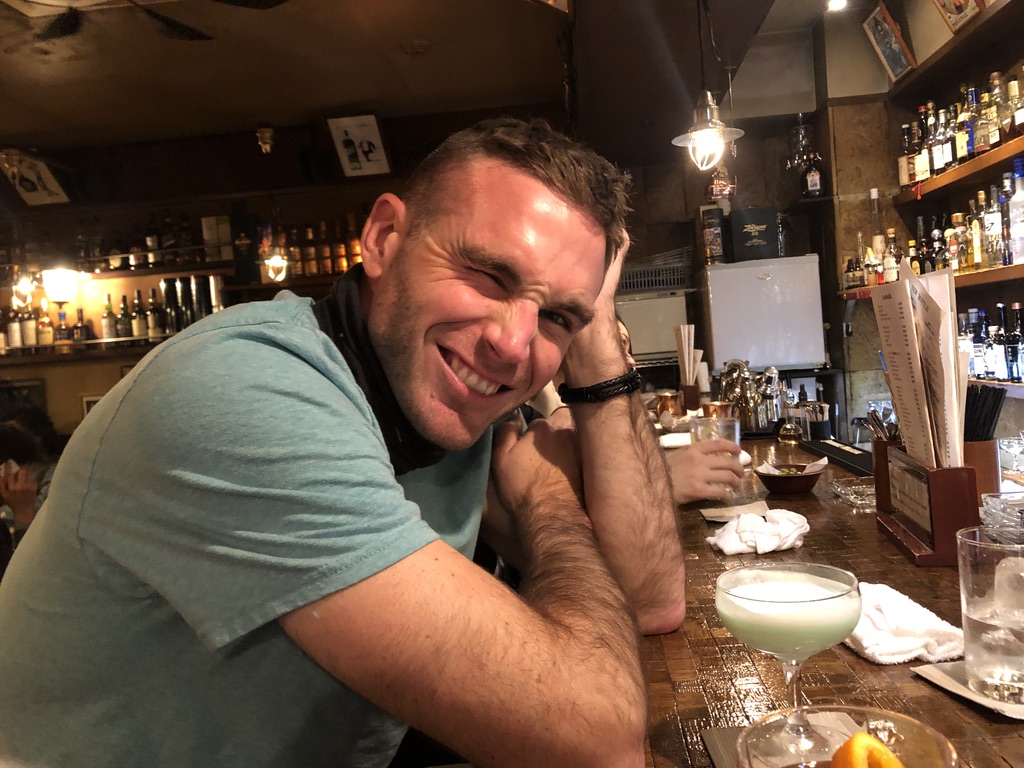
Rui and I both finished our drinks and decided to order another round as the bar had a cover and we didn’t want to wander to another nearby bar and get hit with a new cover for possibly inadequate cocktails. The cover also included some snacks for us to enjoy which were a nice salty accessory to the already savory cocktails. The second round tasted just as amazing as the first but we unfortunately had to gulp down the drinks a little quicker as midnight was approaching and that meant the possibility of missing our last train out of dodge. We decided to head closer to the hotel and grab one last nightcap near there. We rushed out of the bar and towards the station in an attempt to catch one of the last and soon-to-arrive trains home. The streets were filled with young people which I could easily divide into two groups. A number of the youth were totally trashed and struggling to stand, let alone keeping their act together, while the others were still trying to get their buzz going, drinks in hand and preparing to enter the nearby clubs.
Japan’s streets are clean enough and there’s so little theft that sometimes business men can be spotted sleeping on the sidewalk or in the alleys after late nights of being incapable of finding their way home.
We quickly made our way through the station in an effort to get to our train as many other contestants sprinted by us to catch their own trains that were now packed to the brim with people trying to retreat to their respective neighborhoods. We squeezed onto our specific train and although it was cramped, I felt a little relief knowing we were getting off in just 2-3 stops and were conveniently positioned close to the doors. We arrived back in Shinjuku and were in search of one final drink before returning to the hotel. Fortunately, the hotel was located just 5 minutes from Golden Gai.
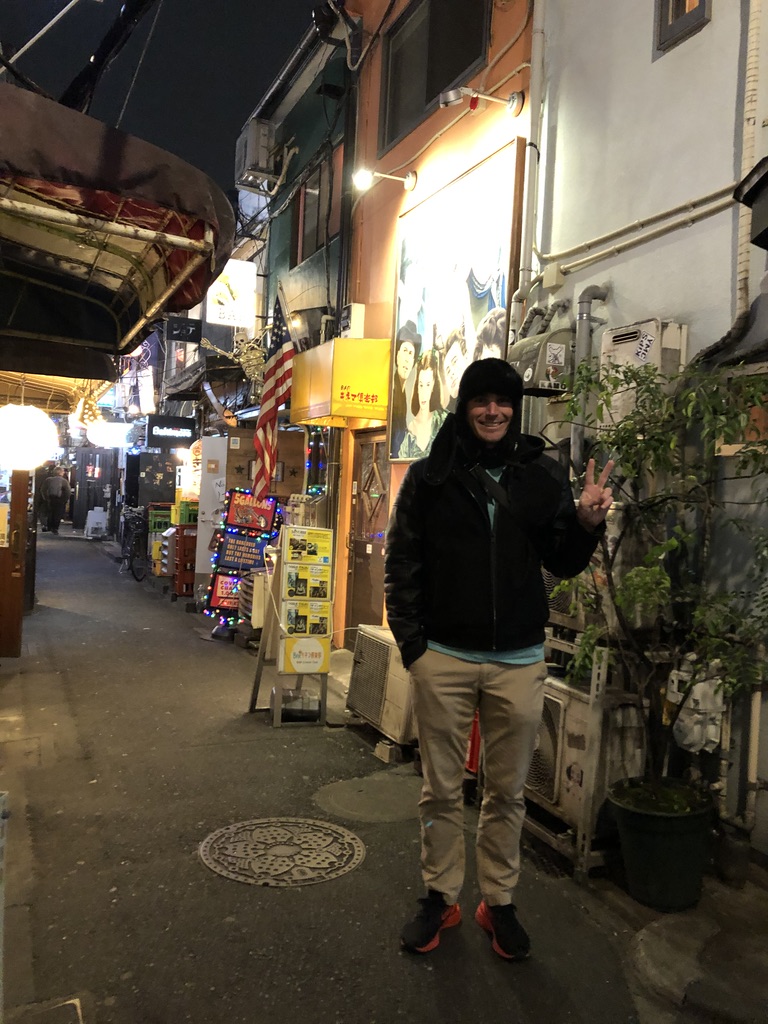
Shinjuku’s Golden Gai is a small area near Kabukicho and is famous both as an area of architectural interest and as a nightlife hub. It is composed of a network of six narrow alleys, connected by even narrower passageways, some of which are just about wide enough for a single person to pass through. Even though the area is small, Golden Gai hosts over 200 unique different bars for you to choose from, most ranging from 4-8 seats.
Many bars don’t open until 8pm or later. Although, they’ll usually stay open until about 4am, some staying open all throughout the night.


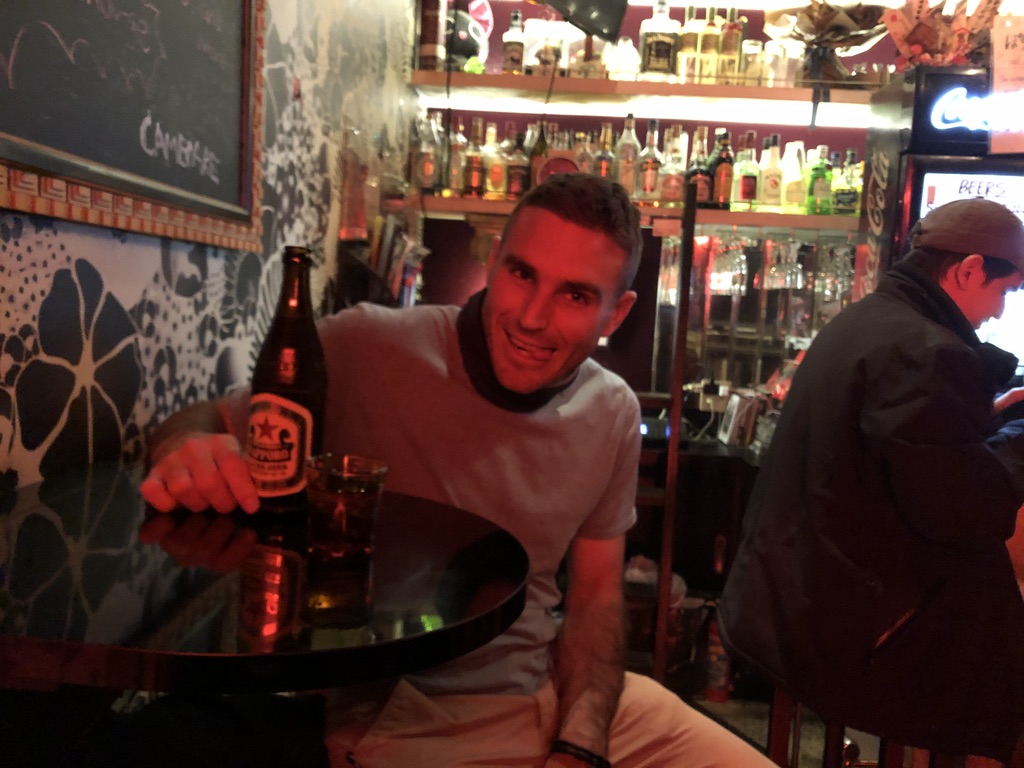
We slowly made our way through the small alleyways trying to decide on which of the super small bars we’d pick to grab a drink at. We eventually found one that didn’t have a cover and was located up a steep staircase. We made our way up the stairs and found ourselves in a small bar that featured 5 seats that were unoccupied with a bartender dabbling behind the bar. We felt a little put off by the initial vibe but had already pretty much committed so we decided to take a seat and try our luck with the drinks. Unfortunately our initial gut feeling was right and drinks didn’t compare to our previous stop but the bartender did speak a little English and was quite friendly. After a nice little conversation with the owner, we headed back to the cramped alley both aware of the need to make another attempt at a legitimate nightcap. We rolled the dice again at another bar that sounded a little busier from outside and resided once again upstairs. It turned out to be French-themed bar with about 3 loud patrons sitting at the bar. We chose to occupy the nearby lone two-seater high-top table. I wasn’t really feeling lucky at this point and just ordered a safe bottled beer as we enjoyed our final drink of the evening. The night had turned pretty hazy at this point but we were able to manage our way back to the hotel and were welcomed yet again by a vacant front desk allowing Rui to join me for some shuteye after one hell of a fun night.